


Skill Development
Skill Development
Build thinking skills through play that feels purposeful, not pressured.
Puzzles and hands-on challenges can invite observation, planning, memory, spatial reasoning, fine-motor control and flexible problem-solving. Questelle focuses on play experiences that let those skills grow naturally through repeated practice and discovery.
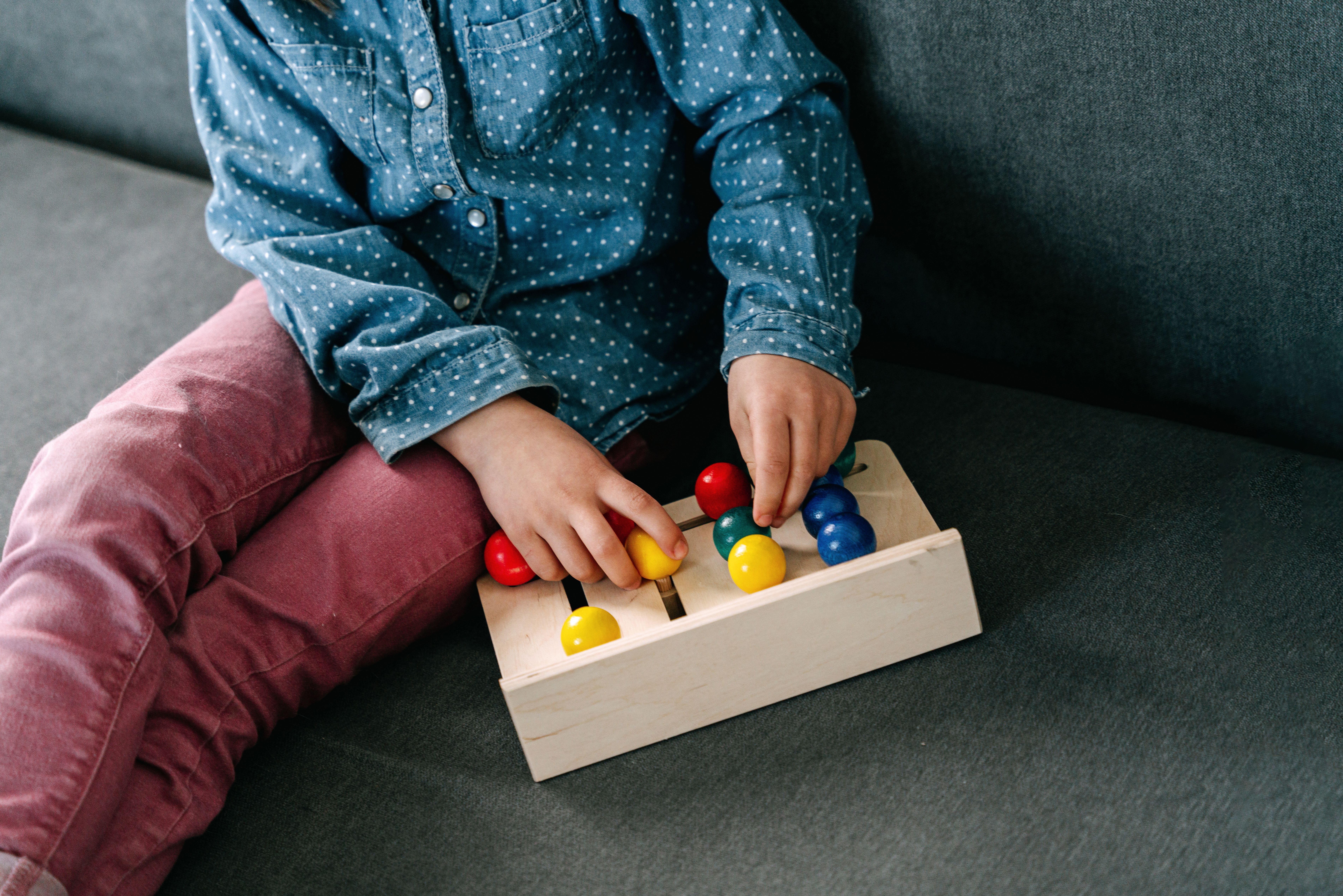
Start with one skill
A focused challenge can support several kinds of thinking at once.
Choose the main skill you want the activity to emphasize, then let the play stay flexible. A maze may center on planning while also using visual tracking. A wooden puzzle may emphasize fine-motor control while also inviting shape recognition and memory.
Logic and reasoning
Use clues, rules and relationships to decide what can happen next and what can be ruled out.
Spatial thinking
Rotate, compare, fit and mentally reposition shapes to understand how pieces relate in space.
Memory and focus
Hold small pieces of information in mind while staying with a sequence, route or repeated pattern.
Fine-motor control
Pick up, place, rotate, slide and guide pieces with increasingly precise hand and finger movements.
Pattern recognition
Notice repeated colors, symbols, shapes and sequences, then use the pattern to predict what belongs next.
Flexible problem-solving
Try one approach, notice the result and adjust the strategy instead of repeating the same move.
Practice without pressure
Use a simple three-step loop: notice, test, adjust.
This rhythm keeps the player active in the thinking process instead of turning the activity into a sequence of instructions.
-
1
Notice one useful detail. Find a color, shape, route, rule, position or repeated clue.
-
2
Test one idea. Move one piece, trace one path or compare one possible solution.
-
3
Adjust from the result. Keep what worked and change only the part that did not.
Three skill pathways
Match the play format to the kind of practice you want.
Different puzzles highlight different actions. Choosing the right format makes it easier to focus on a specific skill while keeping the experience playful.

Use shared puzzles for language and reasoning.
Ask players to explain what they notice, compare possibilities and describe why one move makes more sense than another.

Use mechanical play for control and spatial reasoning.
Opening, sliding, rotating and fitting pieces creates a direct connection between hand movement and visual problem-solving.
Use repeatable challenges for focus and persistence.
Short logic rounds, mazes, code-breaking tasks and number puzzles can make it easier to practice staying with a problem long enough to try a second approach.
See growth in the process
Progress can look like better questions, not just faster answers.
Skill development is often visible in the way a player approaches the puzzle: pausing before moving, noticing more detail, trying a new strategy or explaining the solution more clearly.
Keep the challenge balanced
Adjust the task without taking away the thinking.
When a puzzle becomes frustrating, simplify one variable while keeping the core challenge intact. This can make it easier to continue practicing the same skill at a more comfortable level.
Explore by skill
Find puzzles and learning toys that match the kind of practice you want.
Questelle brings together logic puzzles, brain teasers, maze challenges, spatial activities, fine-motor play and other thoughtful learning experiences for different skill-building moments.